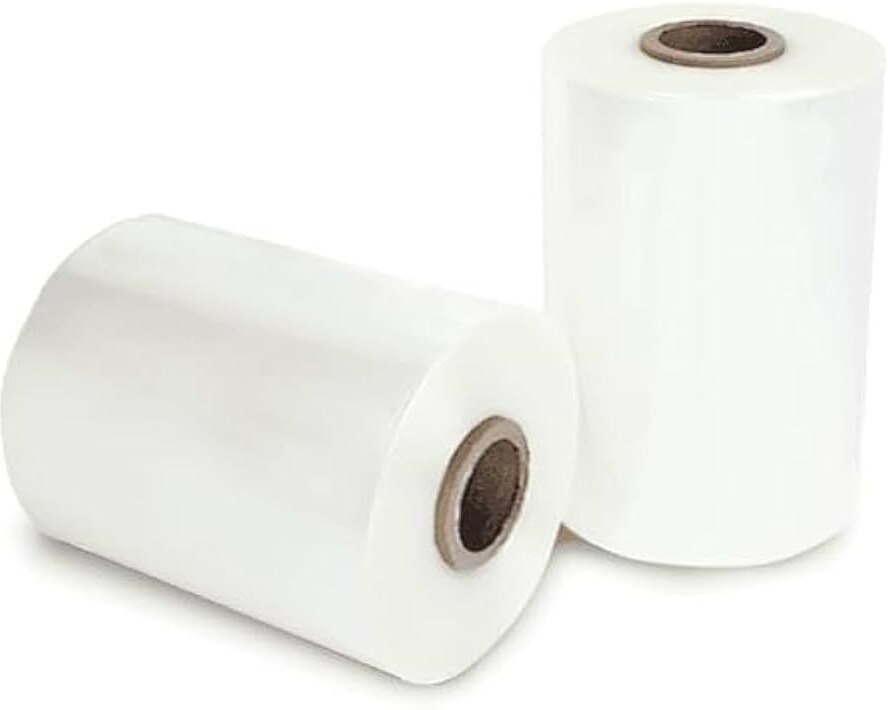
Wrinkles in a packaging film roll can begin at the unwind, web path, printing or coating station, laminator, slitter, or winder, and the crease pattern often shows where the fault started. By tracing when the wrinkle first appears and comparing tension, alignment, roll hardness, material condition, and process settings, you can separate a film defect from a machine or handling problem.
Key takeaways
- Match wrinkle direction to the machine force causing it.
- Check roller alignment, web entry, and nip loading before rejecting film.
- Separate loose edges from hard bands by reviewing tension and winding settings.
- Compare rolls made on the same line, material, and process settings.
Read the Wrinkle Pattern Before Changing the Machine
The first place a wrinkle appears is more useful than the finished roll’s appearance. Longitudinal creases point to machine-direction force: a bowed spreader roll, misaligned idler, uneven nip loading, or angled web entry. Transverse wrinkles indicate cross-web slack or compression; diagonal or herringbone wrinkles suggest roll skew, differential traction, lateral wandering, or unequal cross-web tension.
| Pattern | Likely clue |
|---|---|
| Longitudinal | Alignment, spreader, idler, or nip problem |
| Transverse | Cross-web tension or compression difference |
| Diagonal or herringbone | Skew, wandering, or unequal traction |
| Baggy edge | Loose edge lane, gauge variation, or soft winding |
| Star wrinkles | Loose layers, trapped air, or poor winding compaction |
| Between laminate layers | Unequal web lengths, adhesive, nip, or trapped volatiles |
| Telescoping | Wound layers moving sideways, not a surface crease |
Telescoping requires checks of core parallelism, chuck condition, edge profile, and lateral wandering. A roll can look smooth at the winder, then wrinkle during curing, storage, transport, or slitting as residual solvent, water, or internal stress changes dimensions.
Map film roll production problems to the checkpoint where the defect begins:
- Unwinding: roll damage, core, chuck, or edge profile.
- Web handling: rollers, alignment, tension, or wandering.
- Printing or coating: dryer heat, drag, or coating variation.
- Lamination: unequal tensions, skewed nip, adhesive, or trapped volatiles.
- Slitting: knives, lane tension, edge weave, or conicity.
- Rewinding: hardness, lay-on pressure, torque, or air.
Inspect the web before and after every process. Do not blame the finished roll or pouch until that comparison identifies the first change.
How Tension and Winding Settings Create Loose Edges and Hard Bands
Uneven web tension is a leading cause of packaging film wrinkles. Incorrect unwind-brake settings, inaccurate load-cell calibration, poor tension taper, or tension differences across the web width turn small cross-web errors into loose edges and hard bands.
A transverse thickness or stiffness variation creates a loose lane at the low-gauge or flexible location. That lane buckles at a nip or during winding, so thickness mapping across the web is more useful than one average gauge value.
Control winding hardness as a profile, not a single setpoint. Nip pressure, lay-on roller pressure, winding speed, winding torque, taper tension, and core roundness determine whether layers stay uniform. A hard outer roll over a soft inner roll is unstable and can buckle, star, block, or shift during handling.
Excessive tension crushes or stretches layers near the core. Low tension leaves loose layers that trap air, form starring, or telescope as the roll settles. Air tunnels develop when interlayer air cannot escape; surface roughness, electrostatic charge, winding speed, web tension, and lay-on pressure control that air balance.
For flexible packaging film troubleshooting, check these conditions before blaming the film:
- Map thickness and stiffness across the web, then compare loose lanes with wrinkle positions.
- Verify unwind-brake output, load-cell calibration, cross-web tension, taper tension, torque, and speed.
- Record hardness from core to outer diameter; inspect for hard bands, soft edges, starring, trapped folds, and air tunnels.
- Check nip pressure, lay-on loading, core roundness, and lateral layer movement. Telescoping is layer displacement, not a surface wrinkle.
Find Alignment, Roller, and Material Problems Before Calling the Film Defective
A film within its nominal specification can still wrinkle on a defective web path. Check for non-parallel or misaligned rollers, dirty roller surfaces, damaged bearings, and roller runout before rejecting the material.
A fixed-arc, bowed, or banana roll also needs the correct bow orientation, wrap direction, face width, and surface condition; otherwise it concentrates lateral force in one lane instead of spreading the web progressively.
A spreader roll with the wrong setup can create machine-direction creases. Film thickness variation, gauge bands, poor flatness, curl, blocking, high coefficient of friction, and static produce the same result by creating unequal drag or a loose lane. Map thickness across the web rather than relying on one average value.
Record temperature and relative humidity: they change polymer modulus, core dimensions, friction, static charge, and drying, so a roll can behave differently after moving between facilities.
| Material | Main wrinkle behaviour | What to check |
|---|---|---|
| BOPP | Stiff, low-stretch web; gauge bands and heat can form lanes | Flatness, tension, cooling |
| PET | Stable but sensitive to uneven heat and tension | Dryer profile, alignment |
| Metallized polyester | Surface friction and stiffness vary across layers | Metallized side, static, nip |
| Aluminium foil laminate | Low elongation; a crease tends to become permanent | Avoid concentrated force and sharp bends |
| Polyethylene sealant web | Softer, more heat-responsive, and prone to blocking | Temperature, friction, cooling |
| Multilayer structure | Layers can shrink or slide differently | Interlayer tension and cure |
These differences matter in flexible packaging film troubleshooting. Polymer webs respond to heat, friction, and tension through stretching or recovery; foil has little elongation and retains a crease once formed.
Trace Wrinkles Through Printing, Coating, Lamination, and Slitting
A smooth incoming roll can wrinkle after printing, coating, lamination, or slitting because each process changes web drag, length, heat, or tension. Corona-treatment variation, contamination, ink build-up, and uneven treated width change surface friction at guides and nips. Dryer heat can shrink one lane, exposing a defect that was previously restrained.
- Compare the web before and after each process. A wrinkle appearing before a nip points upstream; one appearing immediately after it points to nip alignment, drag, or tension. Record whether it develops at curing, aging, storage, or slitting.
- At coating or adhesive lamination, check unequal web tensions, a skewed laminating nip, uneven adhesive coat weight, excessive nip pressure, and adhesive that is too viscous or too cold. If two webs enter at different effective lengths, the slack web forms a longitudinal or diagonal wrinkle.
- Check residual solvent, water, and other volatiles. Incomplete drying permits delayed shrinkage during curing or aging, while uneven cooling and differential thermal shrinkage lock curl or baggy lanes into the roll.
Slitting creates film roll production problems through dull or damaged knives, excessive score-knife penetration, unequal slit-lane tension, edge weave, conicity, hard or soft edges, and roll-core or chuck faults. Inspect each slit roll separately.
In flexible packaging film troubleshooting, isolate the first checkpoint where the wrinkle appears; do not correct a slitter or winder setting for a defect created at extrusion, printing, or lamination.
Use a Safe Troubleshooting Sequence and Demand Comparable Roll Data
A packaging film roll for wrinkles troubleshooting in Pune needs evidence before adjustment. Stop or slow the line safely, then mark machine direction, roll position, wrinkle lane, and time.
- Inspect the unwind roll, core, chucks, and edge profile. Record dents, core eccentricity, soft edges, or telescoping.
- Check every web-path roller for dirt, damage, runout, bearing noise, bow direction, and parallelism.
- Verify load-cell readings, unwind-brake settings, taper tension, and tension across the web. A thickness or GSM map often reveals a loose lane that one average gauge value hides.
- Inspect nip gap, nip pressure, lay-on pressure, torque, speed, and roll-hardness profile. Then compare the web before and after each process.
Request records for thickness or GSM maps, tension settings, hardness readings, adhesive coat weight, cure time, residual-solvent or moisture results, slit-roll photographs, ambient temperature, relative humidity, and the exact roll location of the defect.
| Checkpoint | What to compare | What it indicates |
|---|---|---|
| Before process nip | Web flatness and tension | Incoming film or unwind fault |
| After printing, coating, or lamination | Same lane and machine direction | Process-created wrinkle |
| At winder and after storage | Hardness, edges, and layer position | Winding, curing, handling, or storage fault |
A packaging film supplier in Pune should provide comparable roll data, not only a visual “wrinkle-free” claim. When evaluating Arihant Polymoulds And Polymers Pvt Ltd, use these records to separate film, converting, storage, and handling causes.
Related products
 | Multilayer Laminated Film Rolls Multilayer Laminated Film Rolls Multilayer Laminated Film Roll Images Here’s how these rolls typically look in real applications: Transparent laminated rolls Printed pouch roll... View product → |
 | Packaging Film and Roll Providing you the best range of bop lamination film, plain bopp film, color metallized polyester film, multilayer laminated film rolls, laminated... View product → |
Frequently asked questions
What does the direction of a packaging film wrinkle indicate?
Longitudinal creases point to machine-direction forces such as a bowed spreader roll, misaligned idler, uneven nip loading, or angled web entry. Transverse wrinkles indicate cross-web slack or compression, while diagonal or herringbone wrinkles suggest skew, differential traction, lateral wandering, or unequal cross-web tension.
How do tension and winding settings create loose edges or hard bands?
Incorrect web tension and winding pressure can leave edges loose or compress sections into hard bands. Review unwind tension, nip loading, taper tension, winding hardness, and roll alignment together instead of changing one setting blindly.
What should you check before calling packaging film defective?
Inspect roller alignment, roller surfaces, bearings, spreader-roll condition, nip loading, web entry angle, and lateral tracking. Then compare the defect with a retained sample and another roll made under the same conditions.
How can wrinkles be traced through printing, coating, lamination, and slitting?
Record where the wrinkle first appears. If the web is flat before a unit but wrinkled after it, inspect that unit’s tension, nip, temperature, coating or adhesive coverage, roller alignment, and winding conditions before investigating earlier processes.
Related products
 | Laminated Aluminium Foil Roll Images (Typical appearance of laminated foil rolls used in packaging) Silver shiny foil rolls Printed laminated packaging rolls Aluminium + plastic... View product → |
 | Laminated Pouches Whether you're looking to package gourmet coffee, organic snacks, or industrial detergents, printed laminated pouches are the gold standard for... View product → |
 | Plain BOPP Film What is Plain BOPP Film? BOPP stands for Biaxially Oriented Polypropylene It is a transparent, strong, and glossy plastic film Widely used in... View product → |
 | Color Metallized Polyester Film Color Metallized Polyester Film Quick Details Material: Polyester (PET) with metallic aluminum coating Colors: Gold, Silver, Copper, Multicolor Finish: Shiny / reflective metallic... View product → |