A foil laminate does not seal because of its aluminium layer: the innermost polyethylene, CPP, ionomer or coated polymer must soften, contact its matching surface and cool under pressure. By tracing the failure from sealant and machine conditions through testing, storage, filling and purchasing specifications, you can separate a defective roll from a correctable line problem.
Key takeaways
- Inspect the sealant layer before adjusting sealing temperature.
- Set pressure, dwell time and temperature together within the sealing window.
- Check laminate structure, storage conditions and filling contamination.
- Test the failure surface before rejecting the entire roll.
The Sealant Layer, Not the Aluminium, Determines Seal Strength
The innermost sealant web controls heat-seal strength, not the aluminium foil. Polyethylene, cast polypropylene, ionomer or a sealant coating must soften, flow and bond across the pouch mouth; aluminium supplies barrier protection. When investigating a laminated aluminium foil roll for seal strength problems, identify the failure surface before changing sealer settings.
| Failure observed | What it means | How to confirm |
|---|---|---|
| Clean, easy peel between sealant surfaces | Weak or incomplete heat seal | Repeat ASTM F88/F88M using controlled strip width, seal width, cut location, conditioning and peel speed |
| Sealant tears within its own thickness | Cohesive sealant failure | Inspect both peeled faces for sealant transfer; compare the result with the sealant’s specified range |
| Foil, ink or adhesive layer separates | Delamination, not a simple heat-seal failure | Identify the interface: foil/adhesive, film/adhesive or ink lift |
| One continuous unsealed stripe or clean channel | Channel leak from wrinkles, contamination, pressure or jaw flatness | Map the defect across the web and inspect the seal under magnification |
| Leak with an acceptable peel result | Foil crack or pinhole | Flex the laminate, then use dye-penetrant or leak testing; inspect creases, slits and tight radii |
A foil laminate seal failure can therefore hide behind a satisfactory average N/15 mm value. Request the failure mode and test conditions, not only the number: ASTM F88/F88M allows different specimen orientations and separation procedures. Incomplete adhesive cure can also cause blocking, tunnel formation or heat-induced delamination, which changing seal temperature will not repair.
Temperature Is Only One Part of the Sealing Window
Temperature is only one part of the sealing window: the sealant interface must receive enough heat, compression and time, then remain supported while it cools.
- Temperature: The displayed jaw setpoint is not the interface temperature. Thick foil laminates, high line speeds, short dwell and cold spots can leave the sealant below its effective range.
- Dwell: Too little contact time prevents heat from moving through the laminate. Increasing dwell can restore fusion without pushing the outer layers toward distortion or degradation.
- Pressure: Uneven compression leaves low-pressure lanes. Misalignment, wrinkles, gussets and excessive pouch thickness produce localized weak seals even when the average result passes.
- Cooling: Opening the jaws while a polyolefin sealant is molten or soft lets pouch tension neck, peel or distort the seal. Hold the seal closed during controlled cooling.
- Jaw condition: Worn, bowed or damaged non-stick jaws create channels and repeating cross-web weaknesses. A continuous unsealed stripe or clean channel points to geometry, tracking or pressure before temperature.
- Contamination: Oil, powder, sauce, moisture, salt and particles prevent polymer-to-polymer contact. Wiping the outside cannot remove material trapped inside the seal.
For foil pouch sealing issues, vary temperature, dwell, pressure and cooling as separate trial variables, then sample across the seal rather than testing only its centre. These checks expose laminated foil roll packaging problems that a higher temperature can temporarily hide while intermittent leaks remain.
Laminate Construction, Storage and Filling Can Weaken a Good Seal
An adhesive that has not fully cured can masquerade as a sealing defect. Residual solvent, too little cure time or the wrong adhesive-to-crosslinker ratio can cause blocking, odour, bond loss, tunnel formation and heat-induced delamination. Extending cure will not fix a sealant with the wrong sealing range or poor hot tack.
Trace foil laminate seal failure through these construction and handling points:
- A thin or uneven PE, CPP, ionomer or coated sealant layer has less material to absorb product contamination and jaw variation. Measure sealant gauge across the web; aluminium foil supplies barrier protection, not the heat seal.
- The sealant face must be oriented inward and presented to the opposite sealant face. A reversed web can place foil, ink or adhesive at the jaws, producing an apparently closed pouch with little peel strength.
- Heat, humidity and long storage can promote additive bloom, blocking, coating changes or adhesive ageing. Compare samples from the outer, middle and inner roll after defined conditioning.
- Oils, powders, sauces, moisture, salts and particles trapped in the seal area interrupt polymer contact. Wiping the outside does not remove contamination inside the seal.
- Pulling, creasing or overfilling the pouch can stress a hot seal. Keep jaws closed during cooling when the sealant remains soft; opening early can create necking, peel-back or channel leaks.
These are common foil pouch sealing issues, but the failure surface still matters: adhesive delamination points to bond construction, while sealant-to-sealant peel points to the seal layer or its processing.
Test the Failure Before You Reject the Roll
A low seal-strength result does not prove the roll is defective. For aluminium foil laminate troubleshooting, test the sealant web under controlled conditions before changing the machine or rejecting material.
1. Sample the roll at the beginning, middle and end, taking strips from both edges and the centre. Record roll number, laminate batch, web position and storage condition.
2. Make laboratory seals from the unused laminate with the sealant sides together. Hold temperature, dwell, pressure, cooling time, specimen width, cut location, conditioning and peel speed constant. Use ASTM F88/F88M, and report average, minimum and failure mode—not only N/15 mm.
3. Make empty pouches on the production line, then test seals before filling. Fill a second set with the actual product and test immediately and after handling. This separates a material response from pouch geometry, contamination, filling impact and jaw variation.
4. Add dye-penetrant or leak testing for channel leaks, and flex or inspect for foil cracks and pinholes. A peel test cannot prove barrier integrity.
| Result pattern | More likely source | Next check |
|---|---|---|
| Uniformly low results in lab and machine samples | Supplied sealant, construction or cure | Compare another roll or batch |
| Lab seals pass; production seals fail | Sealer, pouch forming or web tracking | Check jaw flatness, pressure, wrinkles and contamination |
| Empty pouches pass; filled pouches leak | Filling or handling damage | Inspect contact points and product contamination |
| Acceptable peel with leaks | Foil crack, pinhole or channel | Use leak, flex and visual inspection |
For laminated foil roll packaging problems, compare identical test data across roll positions and production batches; changing methods destroys the comparison.
Specify and Receive the Roll for the Seal You Need
Specify the sealant before you specify the foil. For a laminated aluminium foil roll for seal strength problems, name the barrier structure, adhesive system, sealant polymer and sealant-side orientation; aluminium foil provides barrier protection, not the heat seal.
Put these requirements in the purchase specification:
- Laminate: foil alloy and thickness, total laminate gauge, adhesive type, cure status, and permitted bond-strength or delamination failure mode.
- Sealant: PE, CPP, ionomer or coating; nominal gauge, seal-initiation range, recommended sealing window and compatibility with the product.
- Hot tack: test method, temperature, dwell, jaw opening interval and minimum force immediately after opening. Do not accept cooled seal strength as a substitute.
- Dimensions: roll width, length, core diameter, winding direction, gauge tolerance, splice limit, telescoping limit and maximum roll diameter.
- Inspection: seal-strength method such as ASTM F88/F88M, strip width, seal width, cut location, conditioning, peel speed, average and minimum results, plus failure mode.
- Receipt checks: identify each roll by lot, retain samples from beginning, middle and end, and inspect blocking, wrinkles, pinholes, foil cracks, tunnels and adhesive odor.
| Choice | Specify | Avoid when |
|---|---|---|
| PE or CPP sealant | Product compatibility and sealing window | The product attacks or migrates through it |
| Ionomer | Hot tack and puncture resistance target | Its cost or processing range is unacceptable |
| Coating | Coat weight, cure and defect limits | A wide process window is required |
Arihant Polymoulds And Polymers Pvt Ltd should receive this data before quoting, so aluminium foil laminate troubleshooting compares equivalent constructions rather than different sealants under one nominal gauge.
Related product
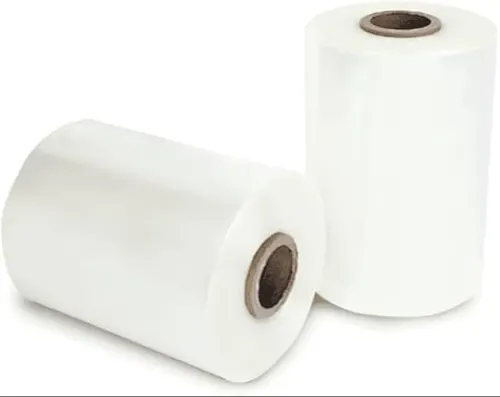
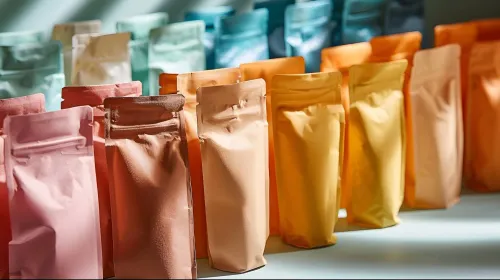
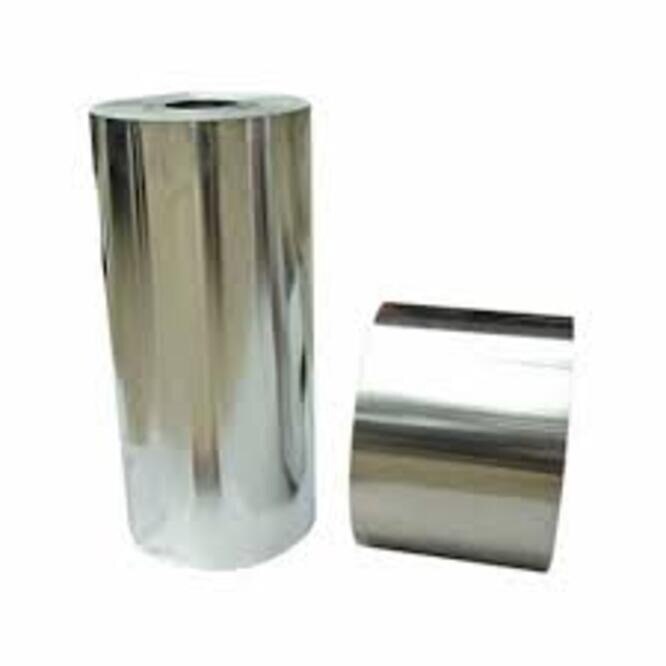
 | Laminated Aluminium Foil Roll Images (Typical appearance of laminated foil rolls used in packaging) Silver shiny foil rolls Printed laminated packaging rolls Aluminium + plastic... View product → |
Frequently asked questions
What determines seal strength in an aluminium foil laminate?
The innermost sealant layer determines seal strength. Polyethylene, cast polypropylene, ionomer or a sealant coating must soften, flow and bond across the pouch mouth; aluminium provides barrier protection.
Why does increasing sealing temperature not always fix a weak seal?
Temperature is only one part of the sealing window. Pressure, dwell time, sealant compatibility and the condition of the film surface also affect whether the layers bond correctly.
How can laminate construction, storage and filling cause seal failure?
An unsuitable sealant combination, moisture, excessive heat, ageing or contamination from the product can weaken a seal even when the sealer settings are correct.
What should you test before rejecting a foil laminate roll?
Inspect the failure surface and test seal strength across samples. Determine whether the seal peeled through the sealant, separated at an interface or failed because contamination prevented bonding.